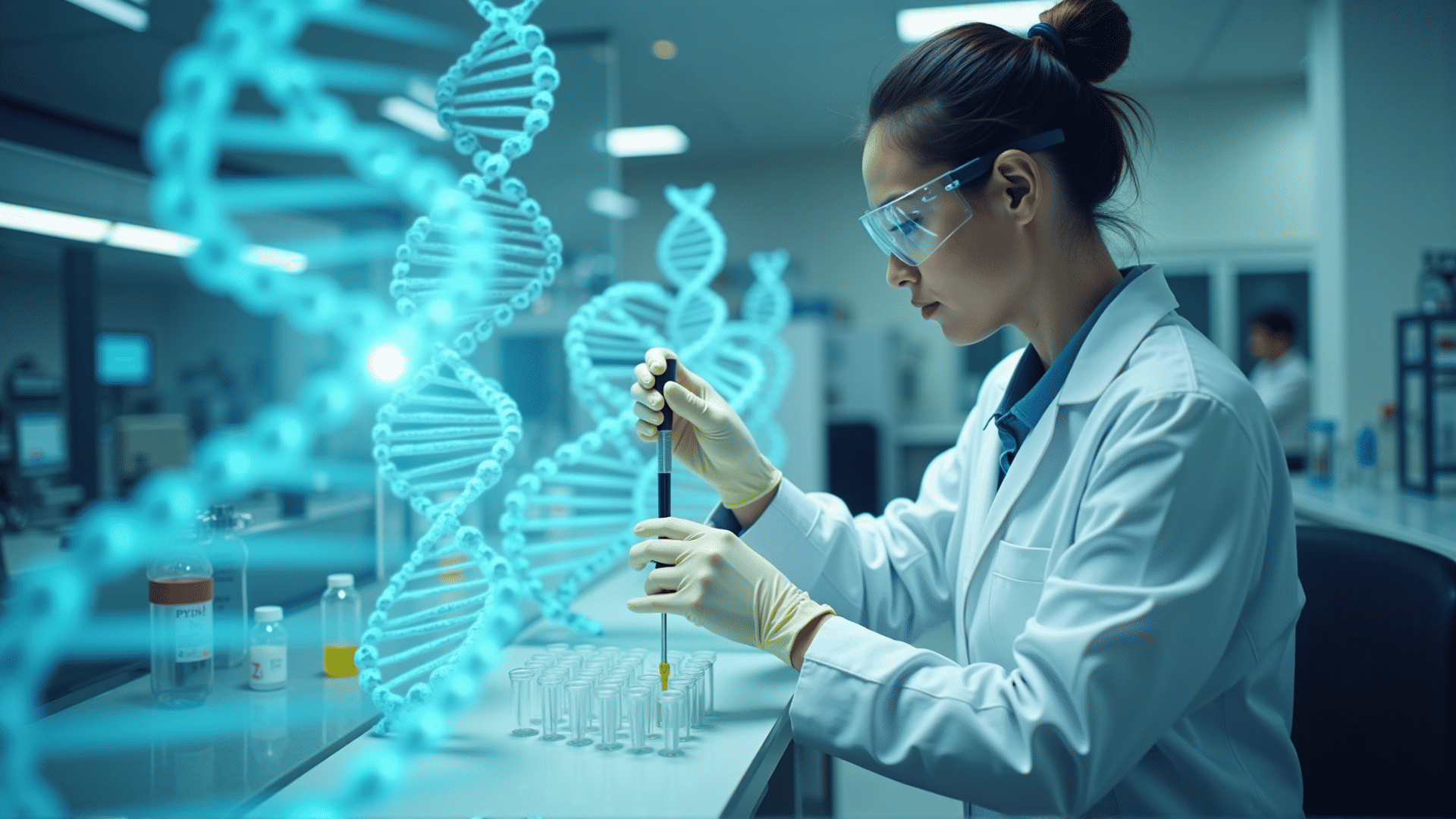
In recent years, the realm of genetic editing has undergone a paradigm shift, propelled by advancements in CRISPR (Clustered Regularly Interspaced Short Palindromic Repeats) technology. Initially emerging as a revolutionary tool for genetic manipulation, CRISPR’s evolution continues to redefine the possibilities in biomedicine, offering a glimpse into a future where precision in genetic editing could transform the treatment landscape for myriad genetic disorders.
At the heart of this revolution is the ability of CRISPR technology to target specific sequences of DNA with unprecedented accuracy. Traditional genetic editing methods often faced challenges like off-target effects and imprecise gene splicing, which could lead to unintended consequences. However, with CRISPR, scientists can now eliminate these concerns by customizing RNA molecules that can guide the CRISPR-associated (Cas) proteins, particularly Cas9, to exact locations within the genome. This innovation allows researchers to carry out precise edits that involve cutting, adding, or modifying genetic material with remarkable accuracy.
Recent breakthroughs in CRISPR technology focus on enhancing its precision even further. Techniques such as prime editing and base editing have expanded the toolkit available to geneticists, allowing them to make more nuanced alterations without introducing double-strand breaks in the DNA, reducing potential collateral damage. Prime editing, for instance, enables the direct rewriting of targeted DNA sequences, effectively correcting mutations at their source. Meanwhile, base editing offers the ability to convert one DNA base pair into another, providing a means to correct point mutations that are responsible for a significant number of genetic diseases.
These advancements have particularly profound implications for the field of medicine, especially in treating genetic disorders. Genetic diseases, many of which have long been considered untreatable, are now within the realm of possibility for intervention. Conditions such as sickle cell anemia, cystic fibrosis, and muscular dystrophy, which stem from single-gene mutations, are prime candidates for CRISPR-based therapies. By directly editing the patient's DNA, these therapies can potentially provide a one-time, permanent solution, reducing or even eliminating the disease’s impact.
Moreover, the scalability and cost-effectiveness of CRISPR technology make it an attractive option for widespread clinical applications. As research progresses, we anticipate not only targeted therapies for rare genetic disorders but also potential applications in more common conditions with genetic components, such as heart disease and diabetes. Personalized medicine, guided by genetic editing, is poised to shift healthcare from a one-size-fits-all model to a more tailored approach, where treatments are customized based on an individual's genetic profile.
The ethical considerations surrounding genetic editing cannot be overlooked, however. As we edge closer to the possibility of germline editing — modifications passed on to future generations — it is crucial to navigate these waters with caution. Ethical guidelines and robust regulatory frameworks need to be established to ensure that the deployment of such transformative technologies remains responsible and focused on the greater good.
In conclusion, the future of genetic editing, underpinned by the ongoing advancements in CRISPR technology, holds immense potential for revolutionizing how we treat genetic disorders. With continued research, collaboration, and careful ethical consideration, we stand on the brink of a new era in medicine — one where genetic diseases might be effectively and permanently addressed at their core. The promise of CRISPR technology is not merely in what we have already achieved, but in the doors it continues to open, offering hope and possibilities for a healthier world.